A Major Comparison of Bitcoinmat.sk and Binance: A Licensed Slovak Platform vs. a Global Giant Without a License
Binance is the world’s largest cryptocurrency exchange, and for millions of users, it has long been synonymous with a wide selection of assets, high liquidity, and fast online access to hundreds of digital currencies. However, the year 2026 brought a major turning point. As of July 1, the European MiCA (Markets in Crypto-Assets) regulation is fully in effect, and Binance was unable to obtain a license by that deadline that would allow it to operate legally in the European Union. For Slovak and Czech users who want to buy or sell cryptocurrencies easily, securely, and directly for cash, a natural question arises: does it make more sense to rely on a global, unlicensed exchange, or on a local, regulated player like Bitcoinmat.sk?
Who's Who
Bitcoinmat.sk is the largest network of Bitcoin ATMs in Slovakia, the Czech Republic, and Austria. The company was founded in 2017; it installed its first ATM at the Magnus Hotel in Trenčín and has since expanded its network to more than 47 machines in Slovakia, 39 in the Czech Republic, and 83 in Austria. Over time, the network of Bitcoin ATMs has evolved into a comprehensive crypto platform—in addition to buying and selling cryptocurrencies directly with cash at the ATMs, it also offers online buying and selling, regular investing via DCA (dollar-cost averaging), savings, staking, and passive income through rewards programs.
Binance, on the other hand, is a global giant founded in 2017 that has long dominated the rankings by trading volume. It offers hundreds of cryptocurrencies, advanced trading tools, derivatives, and a wide range of products for experienced traders around the world.
Strengths and Weaknesses
Binance attracts users primarily with the breadth of its offering—hundreds of tokens, advanced trading pairs, and tools that will be especially appreciated by more experienced users seeking speculative opportunities. This breadth also poses a risk: a novice investor can easily get lost in the vast number of tokens, and more options often mean more room for poor decisions.
Bitcoinmat.sk takes the opposite approach. Its main selling point is its physical presence—a network of kiosks in shopping centers and high-traffic locations where people can buy or sell cryptocurrency for cash without having to create an account on an exchange or send money via bank transfer. This will be especially appreciated by people who prefer simplicity, personal interaction with technology, or who want to convert cash into cryptocurrency immediately. At the same time, the online platform complements this experience with lower fees and tools for long-term portfolio building (savings, DCA, staking).
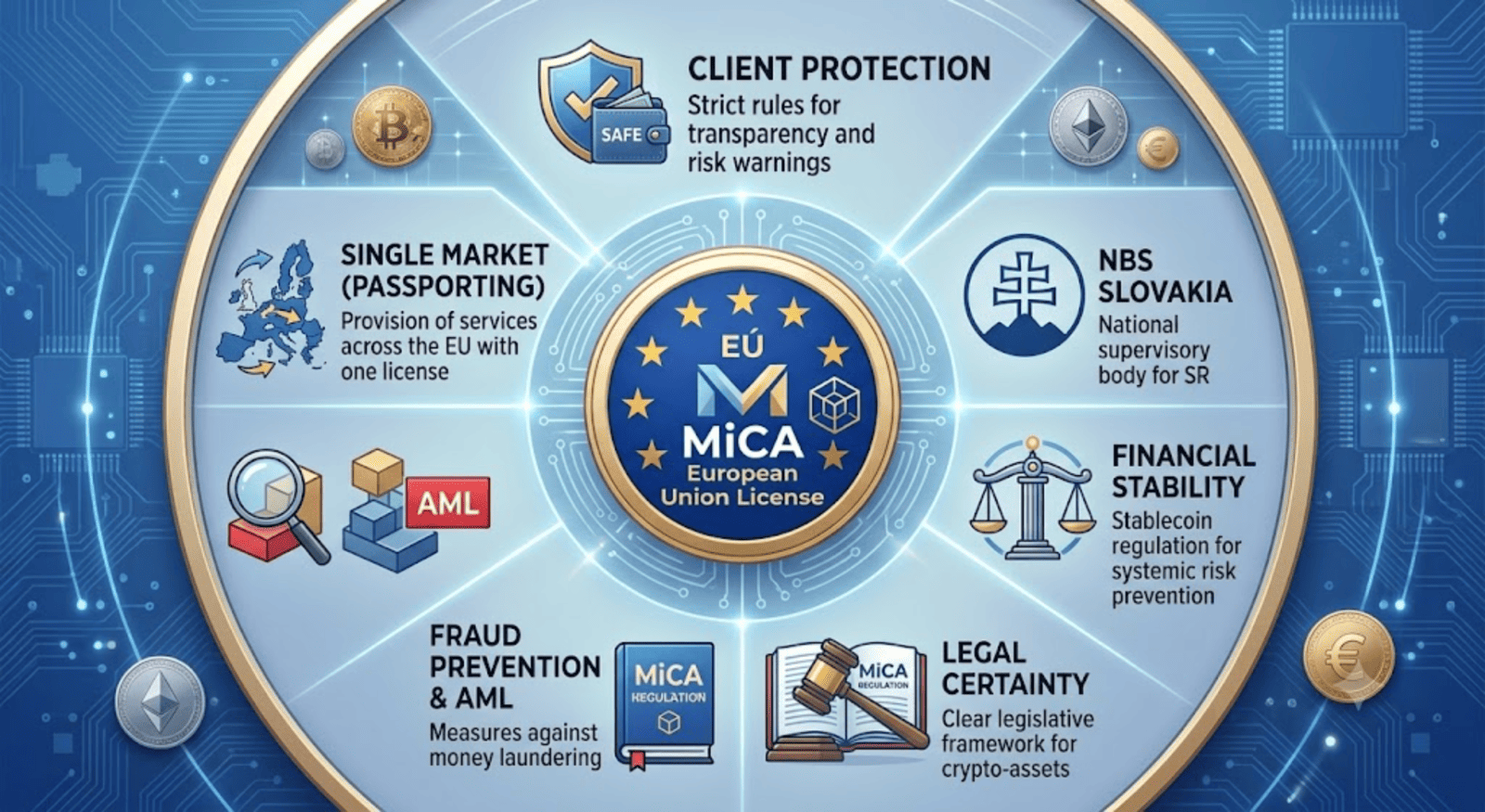
Regulation and Licensing – The Key Difference in 2026
It is precisely in this area that the difference between the two companies is most pronounced. FINTECH SK s. r. o., the company behind the Bitcoinmat.sk network, is listed in the official European register of crypto-asset service providers (CASP) as an entity licensed by the National Bank of Slovakia under the MiCA regulation. The license covers the custody of crypto-assets, the exchange of crypto-assets for cash and other crypto-assets, the execution of orders, and transfers—in other words, precisely the activities that the company actually offers through its ATMs and online platform.
Binance, on the other hand, failed to obtain a license by the deadline. The company had originally applied for a license in Greece but withdrew its application shortly before the end of the transition period—according to available information, primarily due to the regulator’s concerns about the company’s past sanctions and whether founder Changpeng Zhao meets the trustworthiness test required for statutory representatives under MiCA. Binance subsequently notified clients in several EU countries (such as France, Italy, Poland, and Spain) that, as of July 1, 2026, it would restrict or terminate the provision of regulated services, although it continues to state that users’ funds remain secure and available for withdrawal. The company also stated that it plans to apply for a license in another member state, specifically France.
For the average user, this makes a noticeable difference. Without a valid MiCA license, clients are not covered by the standard safeguards provided by the regulation—including the mandatory segregation of client and firm funds, ongoing regulatory oversight, regular audits, and clearly defined procedures for resolving complaints.
Key Comparison
| Criteria | Binance | Bitcoinmat.org |
| Service Type | Global online exchange | A network of physical Bitcoin ATMs + an online platform |
| Cryptocurrency Offerings | Very broad (hundreds of tokens) | A narrower focus on major cryptocurrencies |
| MiCA License | As of July 1, 2026, without a license in the EU, services will be restricted | License from the NBS (FINTECH SK, CASP registry) |
| Purchase/Sale for Cash | Not directly, just online platforms | Yes, right at the vending machine |
| Fees | Low (in the order of tenths of a percent) |
Higher, typical for Bitcoin ATMs Lower on online platforms |
| Additional Services | Trading, derivatives, staking, advanced tools | DCA savings, staking, passive income, physical availability |
| Language and Local Support | Global Support | Slovak, Czech, English, local presence |
| Suitable for | Experienced traders looking for a wide selection of tokens | Beginners and intermediate users |
Conclusion
There is no one-size-fits-all answer to the question “which platform is better”—Binance and Bitcoinmat.sk serve slightly different purposes. Binance remains a technologically advanced global player with a vast selection of assets and low fees; however, as of July 1, 2026, it does not hold a valid MiCA license in the European Union and must restrict its services to European clients.
Bitcoinmat.sk, on the other hand, positions itself as a local, physically accessible, and regulated player. Its network of ATMs enables easy and fast exchange of cash for cryptocurrencies, and the company complements this experience with an online platform offering savings and staking options. A key argument in favor of Bitcoinmat.sk is precisely its MiCA license from the National Bank of Slovakia—at a time when the world’s largest exchange is grappling with regulatory uncertainty in Europe, this is a distinction that carries real weight for the average Slovak or Czech user.